Emergency call
+1 (800) 816-6677
+1 (800) 816-6677
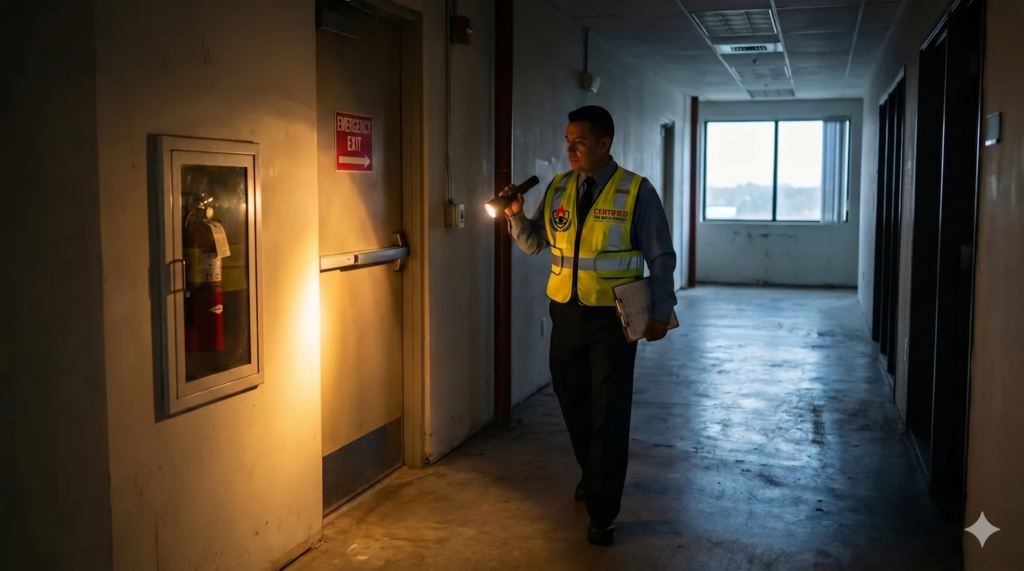
In California, a “fire watch” isn’t just a safety suggestion—it is a legal requirement under the California Fire Code (CFC) and Cal/OSHA regulations. When the high-tech systems we rely on to detect and suppress fires go offline, the law requires a “human backup” to step in.+1
Here is a breakdown of exactly when a fire watch is required in the Golden State.
The most common reason for a fire watch is an impairment of life-safety systems. According to the California Fire Code (Section 901.7), if a required fire alarm or sprinkler system is out of service, the building owner must:
Common Scenarios:
Under Cal/OSHA (Title 8), a fire watch is mandatory during activities that create sparks or open flames—collectively known as “hot work.” This includes welding, cutting, grinding, and brazing.+1
A fire watch is required for hot work when:
The Cool-Down Period: After the work is finished, the fire watch must stay on-site for at least 30 to 60 minutes (depending on local ordinances) to ensure no “smoldering” fires ignite later.
If a building or venue expects a crowd that exceeds its legal occupancy limit, or if the event involves high-risk elements, the Fire Marshal may mandate a fire watch.
In some California jurisdictions, if a building is vacant and has a history of trespassing or arson, or if it is located in a High Fire Hazard Severity Zone during Red Flag Warnings, local authorities may order a 24/7 fire watch to prevent property loss.
A person on fire watch is not allowed to have other duties (like construction or janitorial work). Their sole focus is:
| Trigger | Regulation | Duration |
|---|---|---|
| System Outage | CFC 901.7 | Until the system is fully repaired and tested. |
| Hot Work (Welding) | Cal/OSHA Title 8 | During work + 30-60 mins after completion. |
| Special Events | Local Fire Marshal | For the duration of the event. |
| Safety Hazard | AHJ Discretion | Until the hazard is mitigated. |